
The Architecture of Loneliness
The project explores how the built environment shapes experiences of loneliness among young women in Hjørring and Copenhagen. Focusing on a group overrepresented in loneliness statistics, the project generates new knowledge that is relevant to academic research and professional practice
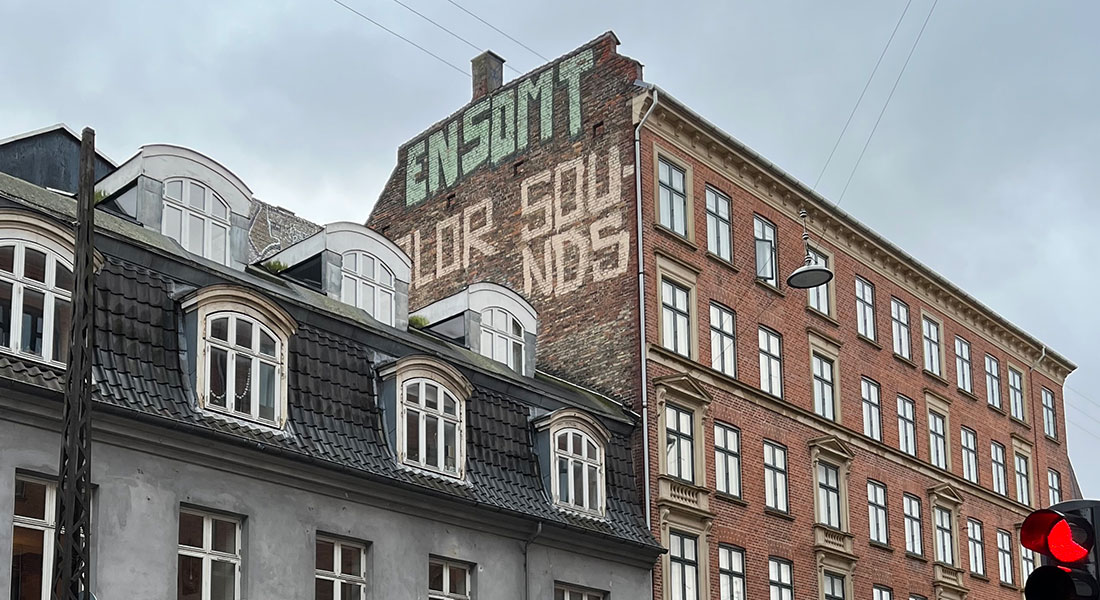
The Architecture of Loneliness investigates the relationship between the built environment and young women’s lived experiences of loneliness in Hjørring and Copenhagen. The project recruits two groups of 15 women aged 18-35 from Hjørring and Copenhagen’s inner-city neighbourhoods. These cases enable a comparative analysis of how differences in population density, urban design, and architecture shape experiences of (non-)lonely places and feelings of loneliness.
Methodologically, the project draws on place-based analyses, photo elicitation, walking interviews, and focus group interviews. Theoretically, it is grounded in phenomenology and a relational understanding of place. From this perspective, (non-)loneliness is not seen as an inherent quality of places but as an experience emerging through interactions between people, activities, and environments.
The project's main research question is: How do different forms of built environments shape experiences of loneliness? This question is explored through two sub-questions: (1) What characterises the experiential qualities of ‘lonely’ and ‘non-lonely’ places in Hjørring and Copenhagen for young women experiencing loneliness? (2) How do these young women perceive the relationship between ‘lonely’ and ‘non-lonely’ places and their own feelings of loneliness in everyday life?
Researchers
Internal
This content is temporarily unavailable because the system it is fetched from cannot be reached. The rest of the site works as usual.
Status is available on the operating status page.
External
| Name | Title |
|---|---|
| Jensen, Ole B. | Professor, University of Aalborg |
| Baaner, Ea | Research assistant, University of Aalborg |
Funding

This project is funded by Realdania.
Project period: January 2027 - September 2030
Pl: Andreas Melson Gregersen